Hot Rolled Coil, ERW Pipe, and Formwork in Modern Construction

Introduction
The construction and infrastructure industries depend on high-quality steel products to build durable, reliable, and efficient structures. Materials such as hot rolled coil, ERW pipe, and Formwork play important roles in manufacturing, structural applications, and concrete construction. Each product serves a specific purpose, helping contractors, engineers, and manufacturers meet the demands of modern projects.
Understanding the properties and applications of these materials helps businesses select suitable products, improve project efficiency, and maintain consistent quality.
What Is Hot Rolled Coil?
Hot rolled coil is a steel product manufactured by heating steel above its recrystallization temperature and passing it through rolling mills to achieve the required thickness. The resulting steel is typically supplied in large coils, making it suitable for further processing and industrial manufacturing.
Hot rolled coil is widely used because of its versatility, strength, and suitability for applications where precise surface finishes are less critical than those required for certain cold-rolled products.
Common Applications of Hot Rolled Coil
Hot rolled coil is used in several industries, including:
Construction: Manufacturing structural components and steel sections.
Automotive: Producing selected vehicle components and industrial parts.
Pipe manufacturing: Serving as a raw material for producing certain welded steel pipes.
Heavy engineering: Supporting machinery, equipment, and industrial fabrication.
Infrastructure: Supplying steel for various structural and industrial applications.
When purchasing hot rolled coil, buyers should evaluate thickness, width, grade, mechanical properties, surface condition, and applicable quality standards. Selecting the correct specifications can improve manufacturing efficiency and reduce material waste.
Understanding ERW Pipe and Its Industrial Uses
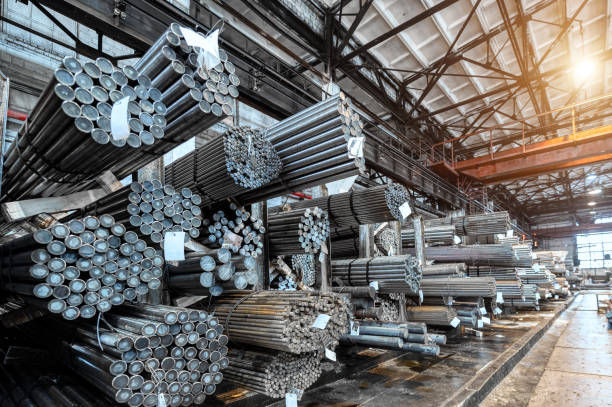
Electric Resistance Welded (ERW) pipe is manufactured by forming steel strip or coil into a cylindrical shape and joining the edges using electrical resistance welding. The process creates a longitudinal welded seam and is commonly used for producing pipes in a wide range of sizes.
ERW pipe is valued for its consistent dimensions, manufacturing efficiency, and versatility across construction and industrial applications.
Where Are ERW Pipes Used?
ERW pipes are commonly used in:
Building and infrastructure projects.
Structural frameworks and support systems.
Industrial equipment and fabrication.
Fencing and general engineering applications.
Selected fluid transportation applications, where the pipe grade and specifications are suitable.
The performance of an ERW pipe depends on its material grade, wall thickness, manufacturing quality, and intended operating conditions. Buyers should confirm relevant testing and compliance requirements before selecting a product for pressure-bearing or other safety-critical applications.
How Hot Rolled Coil Supports ERW Pipe Manufacturing
Hot rolled coil can serve as a raw material for manufacturing ERW pipes. During production, the steel strip is formed into a tubular shape, and its edges are welded together. The pipe may then undergo sizing, cutting, inspection, and other finishing operations.
The quality of the input coil can influence manufacturing consistency, forming performance, and the quality of the finished pipe. For this reason, manufacturers should select coil grades and dimensions that meet their production requirements.
What Is Formwork in Construction?
Formwork is a temporary or permanent mould system used to hold fresh concrete in the required shape until it gains sufficient strength. It is an essential part of reinforced concrete construction and is widely used in residential buildings, commercial developments, bridges, industrial facilities, and infrastructure projects.
Formwork systems may be made from steel, timber, plywood, aluminium, or engineered materials. The appropriate choice depends on the project's design, concrete requirements, construction schedule, and intended reuse.
Benefits of Proper Formwork Systems
1. Structural accuracy: Correctly designed formwork helps concrete elements achieve their specified dimensions and shapes.
2. Improved surface quality: Suitable formwork materials can help produce a consistent concrete finish.
3. Construction efficiency: Reusable systems can reduce setup time and material waste when properly planned.
4. Durability and reuse: Steel formwork can offer a long service life when maintained and handled correctly.
5. Workplace safety: Proper design, installation, inspection, and support help reduce the risks associated with fresh concrete loads.
Formwork must be designed and installed to withstand the expected loads, including fresh concrete pressure, workers, equipment, and construction activities.
The Connection Between Hot Rolled Coil, ERW Pipe, and Formwork
Although these products serve different functions, they are connected through the broader steel and construction supply chain.
Hot rolled coil provides a versatile raw material for manufacturing various steel products, including certain ERW pipes. ERW pipes support structural and industrial applications when designed for the intended use. Steel is also used in formwork systems, where strength and durability can support repeated construction cycles.
Contractors and manufacturers can improve project planning by considering the specifications, availability, and intended applications of these materials together.
For example, a construction project may require ERW pipes for suitable structural applications and steel formwork for repeated concrete casting. Reliable sourcing and proper technical evaluation help ensure that each product meets the project's requirements.
Factors to Consider When Buying Steel Products
Selecting appropriate materials requires more than comparing prices. Businesses should consider several important factors before purchasing hot rolled coil, ERW pipe, or steel formwork.
Material specifications: Confirm dimensions, thickness, grade, and required mechanical properties.
Quality assurance: Review inspection reports, test certificates, and relevant product documentation.
Application suitability: Match each product to its intended structural, industrial, or construction use.
Corrosion protection: Consider the operating environment and any required protective coating or maintenance.
Supplier reliability: Evaluate product consistency, delivery schedules, and technical support.
Cost efficiency: Compare the total cost of ownership, including fabrication, installation, maintenance, and reuse where applicable.
These factors can help businesses avoid unnecessary material waste and support reliable project execution.
Conclusion
Hot rolled coil, ERW pipe, and Formwork are valuable materials and systems across the steel manufacturing and construction industries. Hot rolled coil serves as an important raw material, ERW pipes provide versatile solutions for suitable structural and industrial applications, and formwork enables the accurate and efficient construction of concrete structures.
By focusing on material quality, correct specifications, safety, and supplier reliability, businesses can select products that meet their technical requirements and project objectives. Understanding these materials is an important step toward improving construction efficiency and delivering durable infrastructure.

Comments