Green Steel's Role in Quality HR Coil for Formwork
- Renny Boy
- 11 hours ago
- 6 min read

Introduction
Formwork panels get reused dozens of times before they're retired, which means the hot rolled coil (HR coil) behind them needs to hold up to repeated handling, cleaning, and load cycles without losing shape or strength. As green steel production scales up, a fair question follows: does it produce HR coil good enough for demanding formwork applications?
This isn't a sustainability question alone — it's a performance question. Construction businesses specifying formwork panels need to know whether green steel HR coil matches, rather than compromises, the quality they're used to.
In this article, you'll learn what formwork-grade HR coil actually requires, how green steel production methods measure up on those specific requirements, and what real-world testing shows about using green steel in formwork manufacturing.
What Makes HR Coil "Formwork-Grade"?
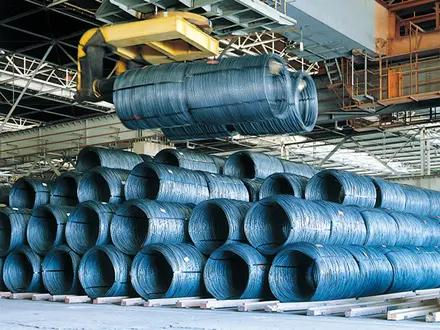
Hot rolled coil (HR coil) is flat steel rolled at high temperature into coil form, later cut and shaped into formwork panels, structural sections, and other construction components. Not all HR coil is suited to formwork, though — the application demands specific qualities:
Flatness and dimensional consistency — panels need to sit flush against each other for a clean concrete finish and tight joints
Consistent mechanical properties — yield strength and ductility need to stay within a tight range across the coil, not just meet a minimum average
Surface quality — surface defects in the coil can transfer directly onto the concrete face during a pour
Reuse durability — formwork panels are stripped, cleaned, and reassembled dozens of times, so the steel needs to resist fatigue and surface degradation
Pro Tip: When specifying HR coil for formwork panel manufacturing, ask for the coil's mechanical property range — not just a single average value. Consistency across the coil matters as much as meeting the minimum spec.
What Is Green Steel, and How Is It Made?
Green steel refers to steel produced with substantially lower embedded carbon emissions than the traditional blast furnace and basic oxygen furnace (BF/BOF) route. Two production methods dominate the shift:
Scrap-based electric arc furnace (EAF) — melts recycled steel scrap using electricity, avoiding the coal-intensive ironmaking stage entirely
Hydrogen-based direct reduced iron (H2-DRI) combined with EAF — uses hydrogen instead of coal to reduce iron ore, then melts the resulting sponge iron in an EAF
Both routes can produce HR coil meeting the same chemistry and mechanical specifications as traditional steel — the difference lies in how the steel is made, not what the finished coil is required to achieve.
Does Green Steel HR Coil Perform as Well in Formwork?
This is the question construction businesses actually care about, and the data suggests a reassuring answer: when produced to the same specification, green steel HR coil performs comparably to traditional HR coil in formwork applications.
Emissions vs. Mechanical Performance

This comparison makes the key point clear: embedded emissions vary dramatically by production route, but average yield strength stays consistent across all three. Mechanical performance is governed by controlled chemistry and processing — not by whether the base iron came from a blast furnace or an electric arc furnace.
Important Note: Consistent average yield strength doesn't automatically mean identical quality control across all mills. Always verify a specific supplier's mill test certificates rather than assuming all green steel producers meet the same tolerance standards.
Formwork Panel Reuse Life
Reuse cycle counts stay broadly comparable across production routes when the underlying specification is matched. This reflects an important principle: formwork panel durability depends far more on coating, handling practices, and site conditions than on which furnace technology produced the original coil.
Real-World Example: A Formwork Manufacturer's Trial Run
A formwork panel manufacturer supplying steel-faced systems to mid-rise construction projects decided to trial scrap-based EAF HR coil from a new supplier, alongside its existing traditional BF/BOF coil source.
The manufacturer ran both coil sources through identical panel production processes, then tested finished panels for flatness tolerance, surface finish, and mechanical properties. Results came back within the same specification range for both sources, with no measurable difference in early-stage reuse testing.
Based on these results, the manufacturer began sourcing a growing share of its HR coil from the EAF-based supplier for new production runs — not primarily as a sustainability initiative, but because the trial confirmed the material met its existing quality bar.
Where Green Steel HR Coil Needs Extra Scrutiny
Green steel HR coil isn't automatically identical to traditional coil in every respect, and construction businesses specifying formwork materials should be aware of a few nuances:
Scrap-based EAF steel can show more chemistry variability if scrap sourcing isn't tightly controlled, since scrap composition varies by source
Newer green steel facilities may have less production history to draw long-term reuse and fatigue data from compared to established traditional mills
Surface finish consistency can vary between mills regardless of furnace technology, making supplier-specific verification important either way
Important Note: The furnace technology behind HR coil doesn't determine formwork suitability on its own — the mill's quality control process does. A well-controlled EAF or H2-DRI mill can match or exceed a poorly controlled traditional mill on every formwork-relevant metric.

Practical Steps for Formwork Buyers Considering Green Steel HR Coil
1. Request Comparable Specification Data
Ask green steel suppliers for the same mechanical property range, flatness tolerance, and surface finish data you'd request from a traditional supplier.
2. Run a Trial Batch Before Full Adoption
Test a limited production run through your existing panel manufacturing process, as the earlier case study illustrates, before committing to a full sourcing switch.
3. Verify Scrap Sourcing Controls for EAF Suppliers
Ask scrap-based EAF mills how they control scrap composition, since inconsistent scrap input can affect chemistry consistency more than the furnace type itself.
4. Don't Assume Green Automatically Means Lower Quality — or Higher
Evaluate green steel HR coil on its actual test data and mill track record, not assumptions in either direction.
5. Factor Embedded Emissions Into Broader Procurement Goals
Where mechanical performance is comparable, embedded emissions data becomes a genuine differentiator for businesses tracking their own supply chain carbon footprint.
Formwork HR Coil Requirements at a Glance
Requirement | Why It Matters | Governed By |
Flatness/tolerance | Clean panel joints, quality concrete finish | Mill rolling process control |
Yield strength consistency | Reliable load-bearing performance across panels | Chemistry and processing control |
Surface finish | Prevents surface defects transferring to concrete | Mill finishing process |
Reuse durability | Cost-effective panel lifespan | Coating, handling, and base steel quality |
Embedded emissions | Sustainability reporting and CBAM exposure (EU imports) | Furnace technology (BF/BOF vs. EAF vs. H2-DRI) |
Suggested Topics for Further Reading
Electric arc furnace (EAF) vs. blast furnace steelmaking explained
Formwork panel systems compared: steel, timber, and engineered options
Reading and interpreting mill test certificates for structural steel
Hydrogen-based direct reduced iron (H2-DRI): current adoption and capacity
Concrete finish quality and its relationship to formwork panel condition
FAQ
1. Does green steel HR coil meet the same mechanical specifications as traditional HR coil? Yes, when properly controlled, green steel HR coil produced via scrap-based EAF or H2-DRI routes can meet the same chemistry and mechanical property specifications as traditional BF/BOF steel.
2. Will switching to green steel HR coil shorten formwork panel lifespan? Not inherently. Reuse life depends more on coating quality, handling practices, and site conditions than on which furnace technology produced the underlying steel, provided both meet the same specification.
3. Is green steel HR coil more expensive for formwork manufacturers? It can carry a production cost premium, particularly for hydrogen-DRI-based steel, though scrap-based EAF steel often costs less of a premium and is increasingly competitive with traditional steel.
4. How can a formwork manufacturer verify green steel HR coil quality before committing to a supplier? Requesting mill test certificates, running a trial production batch, and comparing flatness, surface finish, and mechanical test results against existing specifications are the most reliable verification steps.
5. Does using green steel HR coil affect CBAM obligations for EU-based projects? Yes — for EU importers, HR coil with verified low embedded emissions typically results in lower CBAM certificate costs compared to material carrying the EU's default emissions value.
Conclusion
Green steel's role in formwork manufacturing comes down to a straightforward principle: the furnace technology behind hot rolled coil doesn't need to compromise the flatness, strength, or reuse durability that formwork applications demand. What matters is whether the mill — traditional or green — controls its process tightly enough to deliver consistent, verifiable quality.
For construction businesses evaluating green steel HR coil, the smartest approach isn't choosing based on the production method alone. It's testing the material against the same standards you'd apply to any formwork-grade steel, then letting the data — not the label — guide the decision.


Comments