Building Smarter and Safer Infrastructure: The Role of Formwork, Scaffolding Materials, and ERW Tube

Updated: Aug 1
Introduction
Most conversations about infrastructure quality focus on the finished structure — the concrete strength, the steel grade, the design load. But a huge share of a project's actual safety and efficiency gets decided earlier, in the temporary systems that make construction possible in the first place: Formwork, scaffolding materials, and ERW Tubes.
These three aren't finished building components. They're the working infrastructure that shapes concrete, supports workers at height, and forms the tube stock behind both of the above. When they're specified and maintained well, projects move faster and safer. When they're treated as an afterthought, the result is delays at best and site incidents at worst.
This article breaks down how these three elements work together, what "smarter" actually means in this context, and what site teams should check before relying on any of them. We'll also look at a real-world case where a formwork and scaffolding decision directly affected project safety outcomes.
Formwork: The System That Shapes Every Pour
Formwork is the temporary mold that holds wet concrete in place until it cures enough to support its own weight. It sounds simple, but formwork failure is one of the more serious — and preventable — categories of construction site incidents, because it happens under load, often with workers nearby.
What "Smarter" Formwork Looks Like in 2026
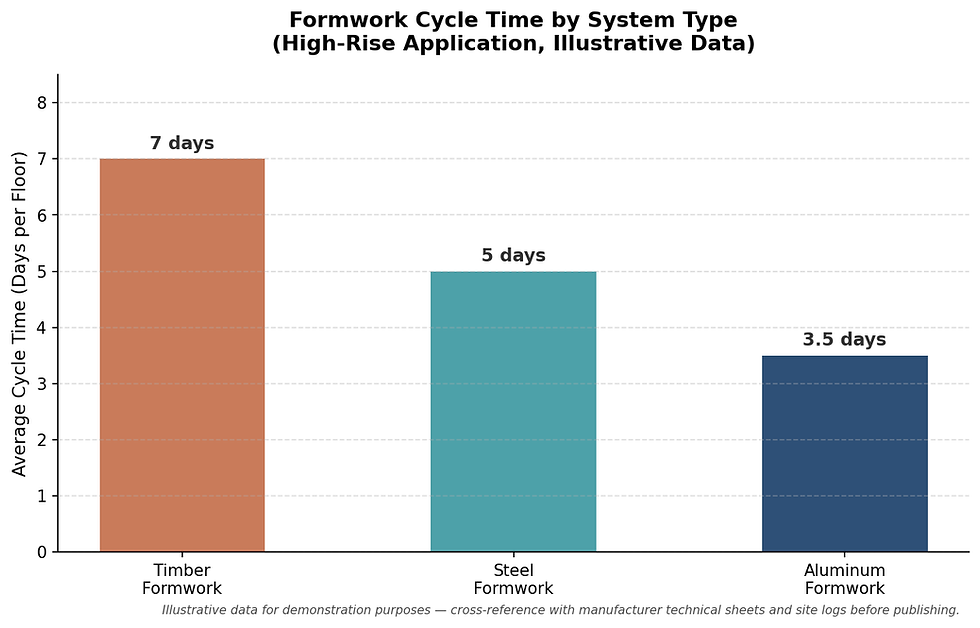
Engineered systems over improvised setups — pre-engineered steel or aluminum formwork systems come with tested load ratings, unlike site-built timber forms assembled without calculation.
Faster cycle times — modular formwork systems are designed for rapid strike-and-reuse, reducing the time workers spend assembling and dismantling forms.
Built-in safety features — modern systems increasingly include integrated guardrails and working platforms, reducing the need for separate temporary edge protection.
Important Note: Formwork failure is rarely caused by the material itself — it's most often caused by exceeding the rated pour rate or pressure the system was designed for. Always confirm the formwork's maximum concrete pour rate (measured in meters of rise per hour) matches your actual pouring plan, not just the wall or column height.
Formwork Types at a Glance
Type | Typical Reuse | Best Fit |
Timber | 5–10 uses | Small, irregular, or one-off pours |
Steel | 100+ uses | Repetitive columns, walls, slabs |
Aluminum | 200+ uses | High-rise, repeating floor plans |
Plastic/composite | 50–80 uses | Smaller specialty pours, corrosion-prone sites |
Scaffolding Materials: Safety Isn't Optional, It's Structural
Scaffolding materials are what workers stand on, climb, and depend on at height. Choosing the right materials isn't a cost decision first — it's a structural and safety decision that happens to also affect cost.
Key Scaffolding Material Considerations
Load rating vs. actual use — confirm the rated capacity accounts for workers, tools, and stored materials combined, not just body weight.
Corrosion and fatigue condition — reused steel components should be inspected for pitting and deformation before every redeployment, not just when visibly damaged.
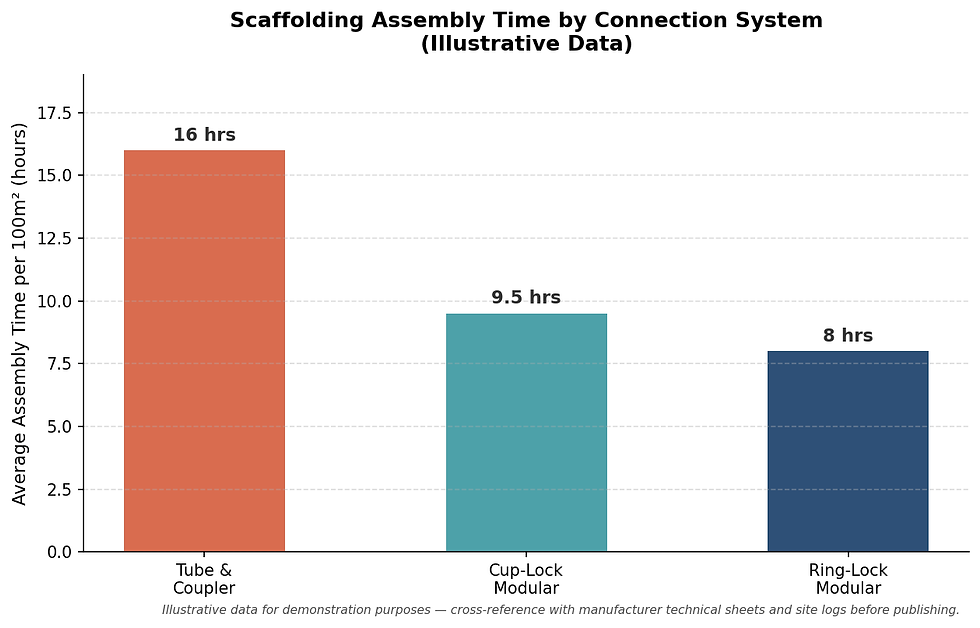
Connection system reliability — modular systems (cup-lock, ring-lock) reduce assembly error compared to older tube-and-coupler setups where connection quality depends on individual technique.
Weather resistance — components exposed to repeated wet-dry cycles degrade faster than site logs often reflect.
Pro Tip: Keep a simple deployment log for every scaffolding component batch — job site, duration, and weather exposure. Over several projects, this turns "looks fine" inspections into data-backed decisions about when a batch actually needs retirement, rather than relying on visual judgment alone.
Why Material Choice Affects More Than Safety
Modular scaffolding systems using standardized steel components also tend to assemble faster, which reduces the total time workers spend in a partially-built, higher-risk state during setup and teardown. Efficiency and safety aren't separate goals here — they reinforce each other.
ERW Tubes: The Common Thread Behind Both Systems
ERW Tubes (Electric Resistance Welded tubes) are steel tubes made by rolling flat steel strip into a cylindrical shape and welding the seam with electrical resistance heat. They're a foundational material for both scaffolding tube stock and many structural components used alongside formwork systems, including shoring props and bracing.
Why ERW Tube Quality Matters Here Specifically
Consistent wall thickness — since scaffolding load ratings assume a specific wall thickness, variation from the specified tolerance directly affects the real-world safety margin.
Weld seam integrity — the electrically welded seam needs to meet the same strength standard as the surrounding tube; a weak seam is a hidden failure point under load.
Straightness and surface condition — bent or heavily corroded tube changes how load transfers through a scaffold structure, even if the material itself still meets nominal specifications.
Pro Tip: Request mill test certificates for ERW tube used in both scaffolding and shoring applications, not just for permanent structural steel. Temporary doesn't mean lower-stakes — a scaffolding tube failure happens exactly where workers are standing.
How These Three Systems Work Together On-Site
On a typical mid-rise construction site, these three elements aren't independent choices — they interact directly:
Formwork is often supported and braced using ERW tube-based props and shoring systems.
Scaffolding built from ERW tube provides the access that lets workers place and strip that formwork safely.
A weak point in the tube stock affects both systems simultaneously, since they frequently share the same supply source.
This overlap is exactly why site teams should evaluate ERW tube quality once, thoroughly, rather than treating scaffolding tube and shoring tube as separate procurement decisions with different quality bars.
Case Study: A Mid-Rise Project Rethinks Its Temporary Works
A contractor building a 15-story mixed-use tower was using timber formwork and a mix of new and older tube-and-coupler scaffolding sourced from multiple rental suppliers. Midway through construction, a routine inspection flagged inconsistent wall thickness in a batch of scaffolding tube that hadn't come with clear mill documentation.
The response: Rather than continue with the flagged batch, the site safety team paused scaffolding use on the affected sections, sourced certified ERW tube with documented specifications from a single verified supplier, and switched the project's remaining floors to a modular ring-lock system for faster, more consistent assembly.
Outcome: The switch added a short delay upfront but reduced scaffolding assembly time on subsequent floors and eliminated the recurring documentation gaps that had made earlier inspections harder to trust. The project's safety team cited the change as a turning point in reducing near-miss reports related to scaffolding setup.
Takeaway: Consolidating tube sourcing and moving to a more standardized scaffolding system solved a documentation problem and a safety problem with the same decision — they weren't actually separate issues.
Supplier and Material Checklist
✅ Formwork rated pour pressure confirmed against actual pour plan, not just structure height
✅ Scaffolding component deployment logs maintained across projects and weather exposure
✅ ERW tube mill test certificates available for both scaffolding and shoring applications
✅ Modular connection systems preferred where repetitive layouts allow faster, more consistent assembly
✅ Single, verified tube supplier used across both scaffolding and shoring procurement where possible
Conclusion
Building smarter and safer infrastructure starts well before the finished structure takes shape — it starts with how well Formwork, scaffolding materials, and ERW Tubes are specified, sourced, and maintained. These systems are temporary, but the consequences of getting them wrong aren't.
Before your next project, take a hard look at your temporary works supply chain as one connected system rather than three separate purchasing decisions. Consistent, well-documented ERW tube sourcing, properly rated formwork, and modular scaffolding systems don't just move projects faster — they reduce the everyday risks that add up over the life of a build.
Frequently Asked Questions
1. What's the biggest cause of formwork failure on construction sites? Exceeding the system's rated concrete pour rate or pressure is one of the most common causes, often because the actual pouring plan wasn't checked against the formwork's design limits beforehand.
2. Is modular scaffolding actually safer than tube-and-coupler scaffolding? Modular systems like cup-lock and ring-lock use fixed connection points, which reduces the chance of assembly error compared to tube-and-coupler setups where connection quality depends more heavily on individual worker technique.
3. How often should ERW tube used in scaffolding be inspected? Best practice is to inspect before every new deployment, regardless of visible condition, along with periodic checks during long-duration projects — commonly weekly, depending on local regulations.
4. Can the same ERW tube be used for both scaffolding and formwork shoring? Often yes, provided the tube meets the wall thickness and certification requirements for the higher-stakes application, but it's worth confirming that a single quality specification covers both uses rather than assuming interchangeability.
5. Does switching to aluminum formwork make sense for smaller projects? Aluminum formwork's cost advantage comes from reuse across many cycles, so it typically pays off fastest on projects with repetitive floor plans and multiple pours — smaller or highly irregular projects may not recover the higher upfront cost as easily.


Comments